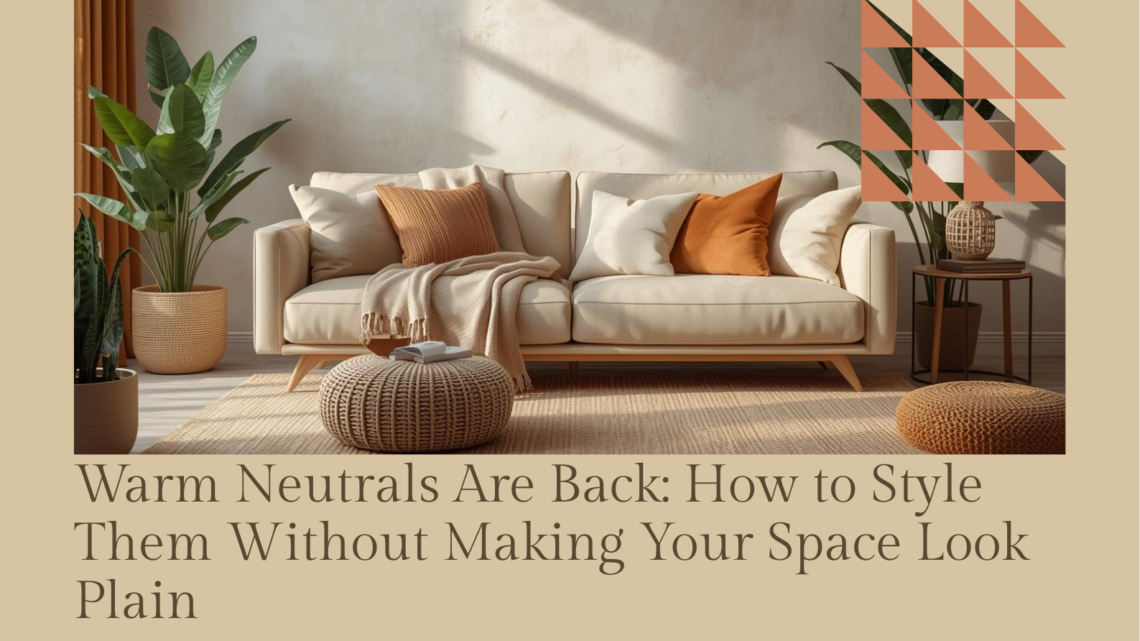
Warm Neutrals Are Back: How to Style Them Without Making Your Space Look Plain
January 10, 2026Interior design trends are always evolving, yet some styles consistently return because of their timeless appeal. Warm neutrals are one of those styles making a major comeback. After years of cool greys, stark whites, and extremely minimalist interiors, many homeowners are seeking warmth, comfort, and a sense of calm in their spaces. Warm neutrals provide exactly that.
But one common concern remains: will warm neutrals make the space look too plain or flat? The answer is no—warm neutrals only look boring when they are used without intention. When styled properly, they look layered, rich, welcoming, and effortlessly elegant.
In this blog, we explore why warm neutrals are trending again and how you can style them in a modern way that feels warm but never dull. With the right approach, you can transform your space into a cosy, natural, and visually interesting environment.
Why Warm Neutrals Are Trending Again
Warm neutrals have returned because people are spending more time at home and want spaces that feel comforting and grounded. Cool tones often appear harsh, cold, or flat under certain lighting, while warm neutrals offer a softer, more inviting atmosphere.
Here are a few reasons behind their return:
1. Growing desire for a cosy home atmosphere
As life becomes more fast-paced and stressful, people want homes that feel peaceful and soothing. Warm neutrals create an environment that promotes relaxation.
2. Natural and earthy design trends
The rise of organic and nature-inspired interiors has led designers to choose materials like wood, stone, clay, jute, linen, and rattan. All of these pair beautifully with warm neutral colours.
3. Flexibility across interior styles
Warm neutrals work in multiple design aesthetics, including modern, Scandinavian, boho, minimalist, Japandi, farmhouse, rustic, and traditional. Their adaptability makes them a reliable choice for any home.
4. Complements most lighting conditions
Warm neutrals look good under natural light, warm bulbs, and even dim evening lighting. This gives them an advantage over cool greys, which can sometimes appear dull or blue.
What Exactly Are Warm Neutrals?
Warm neutrals are colours with yellow, brown, or red undertones. These colours mimic natural elements and create an atmosphere of warmth and comfort.
Common warm neutrals include:
- Beige
- Cream
- Tan
- Taupe
- Caramel
- Camel
- Latte
- Sand
- Warm grey
- Brown
- Terracotta
- Ivory
These shades form the foundation of cosy, balanced interiors.
How to Style Warm Neutrals Without Making Your Space Look Plain
Using warm neutrals is not about sticking to one colour. The key is layering, balancing shades, adding texture, and incorporating natural materials. With the right styling techniques, your space will look soft, elegant, and intentionally designed.
Here’s how to make warm neutrals stand out beautifully:
1. Start With a Warm Neutral Base
Begin by selecting a warm neutral colour for the walls or primary furniture, such as sofas, beds, or cabinetry. Popular choices include warm beige, taupe, and soft ivory. These tones act as a calming backdrop and set the tone for the rest of your décor.
Avoid very bright, cool white walls because they can clash with warm elements and make them appear dull. Warm undertones create harmony and support layering.
2. Layer Various Shades of Neutrals
Layering is essential to keep the space from feeling flat. Mixing several warm tones adds dimension and visual depth. For example, you can combine a beige sofa with cream pillows, taupe curtains, and a caramel leather ottoman. Even though the palette is neutral, the variation in tones makes the room feel rich and dynamic.
Layering can be done through:
- Furniture
- Soft furnishings
- Rugs
- Wall art
- Curtains
- Wooden accents
The goal is to avoid everything matching perfectly. Instead, allow the shades to complement each other naturally.
3. Use Texture to Add Depth
Texture is the secret ingredient that makes warm neutrals visually appealing. Without texture, even the most beautifully selected tones can feel washed out.
You can incorporate texture through:
- Knitted throw blankets
- Linen or cotton cushions
- Woven baskets
- Rattan or cane furniture
- Wool rugs
- Natural wood surfaces
- Stone or clay décor pieces
Textures create interest and warmth by adding layers that catch light differently throughout the day.
4. Incorporate Natural Materials
Warm neutrals thrive when paired with materials that come from nature. Adding organic elements gives the space authenticity and character.
Consider incorporating:
- Wooden furniture in oak, walnut, or ash
- Stone accessories like travertine or marble
- Terracotta pots or vases
- Bamboo and jute pieces
- Wicker baskets
- Linen curtains
- Clay or ceramic décor
Natural materials complement warm tones and bring harmony to the overall look.
5. Add Dark Accents for Contrast
Neutral rooms need contrast to feel grounded. Adding darker accents provides balance and makes the lighter tones stand out more.
Dark accents can include:
- Black pendant lights
- Dark brown picture frames
- Charcoal throw pillows
- oil-rubbed bronze hardware
- Deep wood tones
These elements act as visual anchors, creating structure and sophistication.
6. Use Plants for Freshness and Colour
Plants bring life and energy to warm neutral spaces. Their green leaves stand out beautifully against earthy tones and break up the monotony.
Choose plants like:
- Olive trees
- Snake plants
- Monstera
- Fiddle-leaf figs
- Pothos
- Dried pampas grass
Place plants strategically in corners, on shelves, or next to furniture to highlight focal areas.
7. Introduce Subtle Patterns
Patterns prevent neutral rooms from feeling too plain. But in a warm neutral palette, patterns should remain soft and understated.
Suitable patterns include:
- Geometric rugs in sandy tones
- Subtle stripes
- Herringbone throws
- Light florals
- Minimalist abstract designs
Stick to patterns in the same colour family so they blend seamlessly with the environment.
8. Choose Warm Lighting
Lighting plays a major role in how colours look. Warm neutrals need warm lighting to enhance their cosy tones.
Use warm white bulbs (2700K–3000K) to create a soft glow.
Add lighting through layers such as:
- Table lamps
- Floor lamps
- Wall sconces
- Pendant lights
- Recessed lights
Avoid cool white or blue-toned bulbs, as they can make warm shades appear muddy or greyish.
9. Use Accessories Thoughtfully
Accessories bring personality into a room. With a warm neutral palette, choose décor that supports the theme without overpowering it.
Good accessory options include:
- Ceramic or clay vases
- Wooden trays
- Neutral-toned throw pillows
- Books in warm covers
- Abstract wall art
- Glass jars
- Soft blankets
Mix different shapes and textures to avoid a repetitive look.
10. Create Focal Points
Every well-designed room needs a focal point to draw attention and maintain balance. Without it, neutral spaces can feel unfinished.
You can create focal points using:
- A large statement artwork
- A wood accent wall
- A fireplace
- A dramatic light fixture
- A styled console table
- A feature rug
A focal point gives structure and expresses the homeowner’s personal style.
Best Warm Neutral Colour Combinations
If you’re unsure where to start, here are reliable and visually pleasing combinations:
Beige + Cream + Oak Wood
Soft, timeless, and airy.
Taupe + Camel + Black
Modern and sleek.
Ivory + Brown + Gold
Elegant and slightly luxurious.
Sand + Terracotta + Natural Fibres
Earthy and organic.
Warm Grey + Caramel + Linen
Balanced, modern, and textured.
Common Mistakes to Avoid
To make sure your warm neutrals look intentional, avoid these mistakes:
- Using only one shade
- Choosing cold lighting
- Adding bright white against warm tones
- Avoiding patterns or texture
- Forgetting a focal point
Even a neutral palette needs depth, variation, and balance.
Final Thoughts
Warm neutrals are back and stronger than ever. They are timeless, versatile, comfortable, and visually soothing. When styled correctly, they bring elegance and warmth into your home without ever feeling plain or predictable. By layering tones, mixing textures, adding contrast, using natural materials, and choosing warm lighting, you can create a space that is stylish, balanced, and welcoming.
Whether you’re redesigning a single room or planning an entire home makeover, warm neutrals offer a reliable and beautiful foundation.